
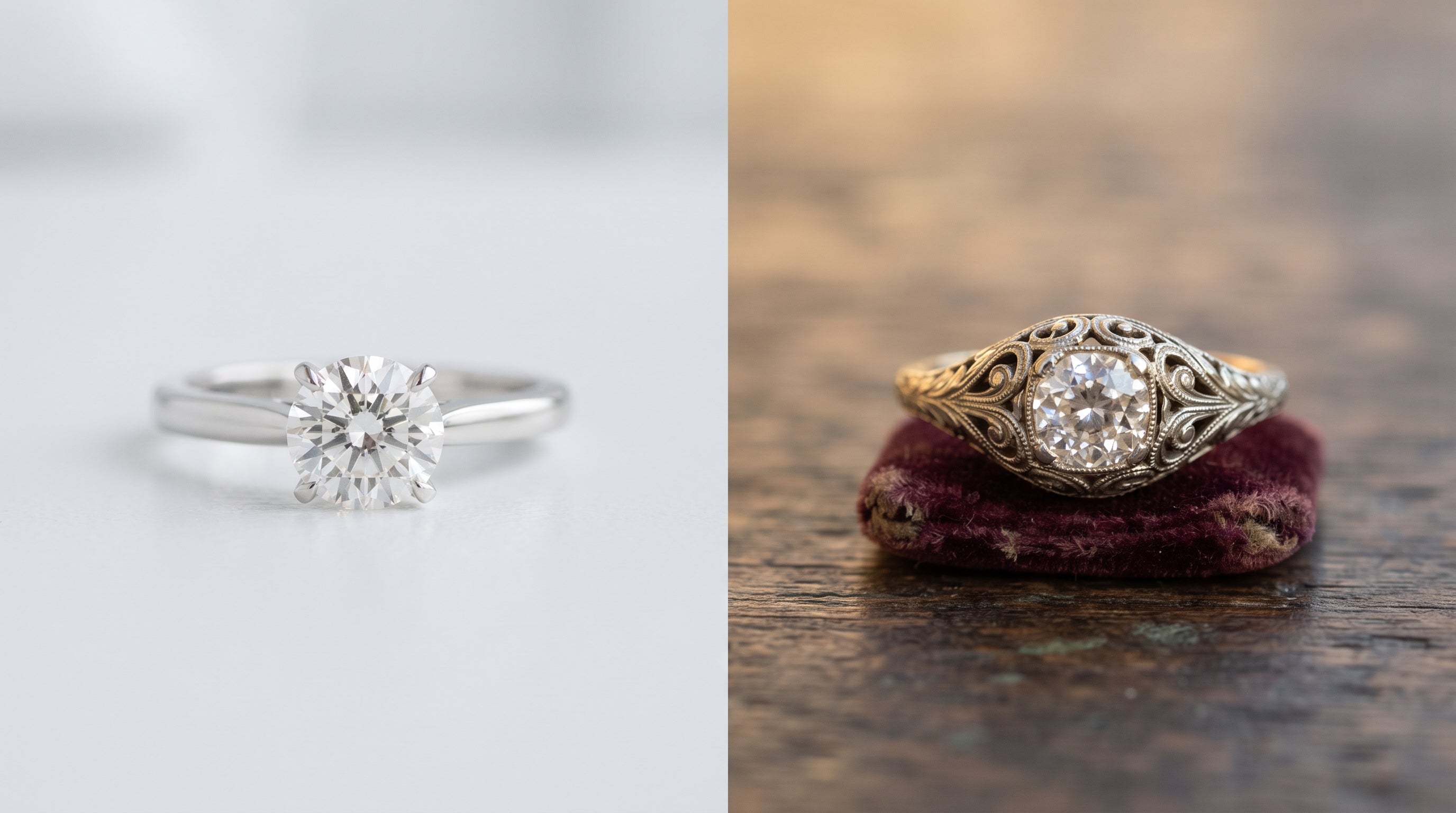
Why So Many Buyers Choose Estate Jewelry
For many people, buying fine jewelry means walking into a jewelry store and choosing something brand new from the showcase. Others are drawn to estate jewelry—pieces that have been previously owned and are now beginning a new chapter with someone else.
One question we hear fairly often is:
"Why would someone choose estate jewelry instead of buying new?"
The answer isn't simply about price. While estate jewelry can sometimes represent excellent value, that's only one of several reasons collectors, jewelry enthusiasts, and first-time buyers are increasingly choosing previously owned pieces.
That doesn't mean estate jewelry is always the better choice. Like any purchase, it has both advantages and limitations. Understanding both sides can help you decide which option best fits your style, priorities, and expectations.
What Does "Estate Jewelry" Really Mean?
One of the biggest misconceptions is that estate jewelry means jewelry that came from someone's estate after they passed away.
In the jewelry industry, that's not what the term means.
Estate jewelry simply refers to previously owned jewelry, regardless of its age or how it changed hands. A ring traded in after five years of wear is estate jewelry. A bracelet inherited from a grandparent is estate jewelry. A 100-year-old Art Deco diamond ring is also estate jewelry.
In other words, estate describes ownership—not age.
Some estate jewelry is antique. Some is vintage. Some is only a few years old. What they all have in common is that they've had a previous owner.
Understanding that definition often changes the way people think about estate jewelry.
Better Craftsmanship—Sometimes
One of the reasons many people are drawn to estate jewelry is craftsmanship.
While exceptional jewelry is still being made today, many older pieces were hand fabricated or finished using techniques that are less common in modern mass production.
Older jewelry often features:
- Hand engraving
- Intricate filigree
- Hand-set gemstones
- Details that required significant bench work
These aren't necessarily "better" than modern techniques—they're simply different. Many buyers appreciate the character and individuality that handcrafted details can bring.
At the same time, it's important not to assume that every older piece is exceptionally made. Just as there has always been beautifully crafted jewelry, there has also always been more commercially produced jewelry. Age alone isn't a guarantee of quality.
Better Value
Another reason buyers often consider estate jewelry is value.
Unlike a newly manufactured piece, estate jewelry has already entered the secondary market. In many cases, buyers can purchase a piece with comparable materials and craftsmanship for less than the cost of buying a newly manufactured equivalent.
That doesn't mean estate jewelry is "cheap," nor does it mean every estate piece is a bargain. Highly desirable designer jewelry, rare antique pieces, and exceptional gemstones may command premium prices.
Instead, the value often comes from paying for the jewelry itself rather than the costs associated with manufacturing a new piece from scratch.
For buyers who appreciate fine jewelry, that can make estate pieces particularly appealing.
Truly One of a Kind
One of the greatest advantages of estate jewelry is uniqueness.
Walk into almost any jewelry store, and you'll find collections produced in multiples. Even beautifully designed pieces may exist in dozens—or hundreds—of identical versions.
Estate jewelry is different.
Once a particular piece is sold, there's a good chance you'll never see another exactly like it.
Whether it's a distinctive Art Deco ring, a Mid-Century cocktail ring, or a handcrafted bracelet from decades ago, estate jewelry often offers individuality that's difficult to replicate.
For many buyers, that's part of the appeal. They're not simply purchasing jewelry—they're choosing something with its own personality.
History and Character
Jewelry often reflects the era in which it was made.
A Victorian ring tells a different design story than an Art Deco bracelet. Mid-century jewelry reflects different tastes than contemporary styles.
Many buyers enjoy that sense of connection to history.
At the same time, it's important to distinguish between history and provenance.
While some estate jewelry comes with documented ownership or original receipts, much of it does not. In many cases, we know approximately when a piece was made based on its design, materials, and craftsmanship—but we don't know who originally owned it or where it spent the last fifty or one hundred years.
For some people, that mystery is part of the charm. Others prefer knowing every detail of a piece's history. Neither preference is right or wrong—it's simply a matter of personal taste.
A More Sustainable Choice
For buyers who value sustainability, estate jewelry offers another advantage.
Choosing previously owned jewelry extends the life of pieces that already exist rather than creating demand for newly manufactured products.
While new jewelry certainly has its place, purchasing estate jewelry can be viewed as a form of reuse—preserving craftsmanship, gemstones, and precious metals that might otherwise remain unworn.
Many buyers appreciate knowing they're giving a beautiful piece a second life.
Are There Downsides?
Estate jewelry isn't the right choice for everyone, and it's worth understanding its limitations.
Because the jewelry has been previously owned, it may show signs of normal wear. Even well-cared-for pieces may have small scratches, minor repairs, or evidence of decades of use. A professional jeweler can evaluate whether those signs are purely cosmetic or whether restoration is recommended.
Documentation is another consideration. While some pieces include original boxes, receipts, diamond certificates, or documented provenance, many do not. Experienced jewelers can often identify approximate age, materials, and craftsmanship, but some details about a piece's history may simply be impossible to verify.
And then there's the question some people are hesitant to ask—but many quietly wonder:
"Is it strange to wear jewelry that belonged to someone else?"
For some people, the answer is yes. They simply prefer the idea of owning something brand new, and that's perfectly understandable.
Others see estate jewelry differently. They view it as craftsmanship being appreciated by another generation, with each new owner adding to its story rather than taking away from it.
Neither perspective is wrong. It's simply a matter of personal preference.
Why We Love Estate Jewelry
One of the reasons we've specialized in estate jewelry for so many years is that no two collections are ever exactly alike.
Every piece has something to teach us—whether it's an unusual gemstone, exceptional craftsmanship, an interesting design period, or simply a style that isn't being made anymore.
Some pieces become treasured family heirlooms once again. Others find owners who never imagined they'd fall in love with a vintage ring or an antique pendant until they saw it in person.
That's what makes estate jewelry so rewarding.
It's not simply about buying something pre-owned. It's about discovering jewelry with character, craftsmanship, and individuality that continues to be appreciated for generations.
Explore Our Estate Jewelry Collection
Whether you're searching for an antique engagement ring, a distinctive vintage bracelet, or simply something you won't find in every jewelry store, estate jewelry offers a unique way to build a collection that's entirely your own.
Ready to explore? Browse our curated collection of estate jewelry by category:
If you're curious about estate jewelry or have questions about a particular piece, we'd be happy to help you understand its age, craftsmanship, condition, and what makes it special.
Read more
Is Jewelry a Good Investment? What Buyers Should Understand First
Can jewelry be a good investment? Understand the difference between personal value, market value, and the factors that influence jewelry resale prices.
Read more
Consignment vs Selling Jewelry: Which Option Is Right for You?
Choosing between consigning and selling jewelry comes down to balancing time, certainty, and potential value. Consignment can achieve higher returns but comes with no guarantee of sale and no fixed...
Read more