
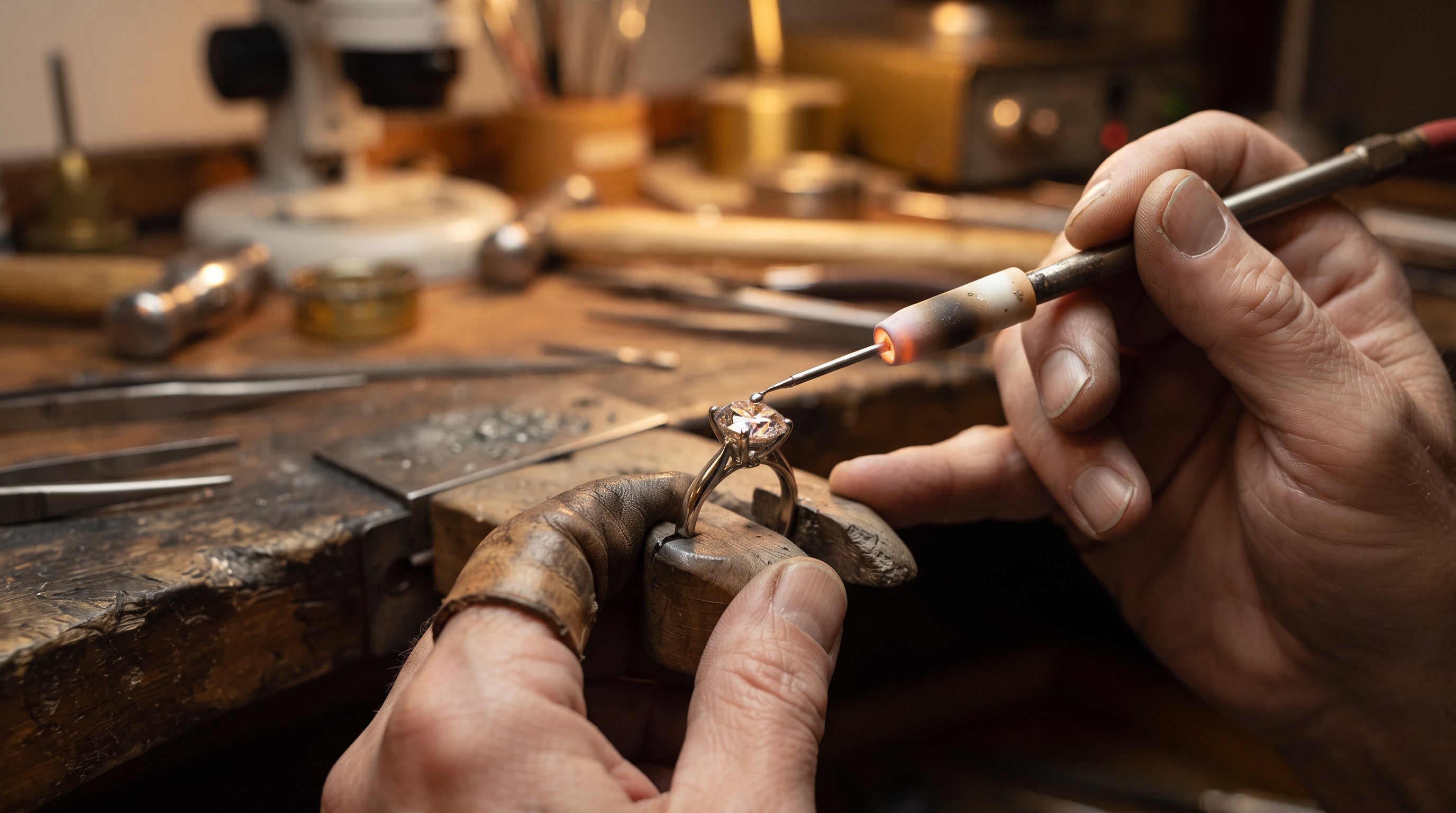
Common Jewelry Repairs Explained: Prong Retipping, Shank Repair, Chain Repair, and Rhodium Plating
Jewelry is made to be worn, but even the finest pieces require care over time.
Everyday wear exposes jewelry to friction, impact, moisture, and movement. Rings are bumped against hard surfaces, chains are pulled and twisted, and clasps and settings experience thousands of small stresses throughout their lifetime.
The good news is that many worn or damaged pieces can be restored by an experienced jeweler.
Understanding common jewelry repairs can help you recognize problems early and know what to expect when your jewelry needs attention.
Prong Retipping: Repairing Worn Diamond and Gemstone Settings
One of the most common repairs for rings is prong retipping.
Prongs are the small metal claws that hold a gemstone securely in place. Over time, repeated wear can gradually thin these areas, especially on rings worn every day.
A worn prong may not look like a major problem, but it can compromise the security of the stone.
During a prong repair, a jeweler evaluates the condition of the setting and may rebuild or reinforce the worn areas with new metal.
Signs that a ring may need prong repair include:
-
A prong feels thinner or flatter than the others
-
A gemstone moves slightly when touched
-
The ring catches on clothing
-
A stone appears less secure than before
Regular inspections are especially important for engagement rings and frequently worn gemstone jewelry because catching a problem early is often simpler than repairing damage after a stone is lost.
Shank Repair: Restoring the Structure of a Ring
The shank is the portion of a ring that circles the finger.
Because the underside of a ring receives constant contact, it is one of the areas most vulnerable to wear. Over many years, a ring shank can become thin, misshapen, or even develop a break.
A shank repair may involve rebuilding worn areas, adding metal, reshaping the ring, or replacing part of the shank entirely.
Sometimes a ring is simply too worn to be repaired with a small patch. In those cases, a jeweler may recommend a complete shank replacement.
This is especially common with older estate rings that have been worn for generations. A beautiful antique ring may still be worth restoring, but the structure must be strong enough to safely support continued wear.
Chain Repair: More Than Just Fixing a Broken Link
Broken chains are another common jewelry repair.
A chain may break because of a damaged clasp, a single weakened link, or stress placed on the chain over time.
A simple repair may involve replacing a clasp or repairing one damaged area.
However, chains require special consideration.
When one area of a chain has failed, it is often a sign that other links may also be weakened. The same wear that caused one break may exist throughout the piece, especially in delicate chains worn regularly.
An experienced jeweler will examine the overall condition of the chain and help determine whether a repair is likely to be a lasting solution or whether the chain has reached a point where continued repairs may not be practical.
Rhodium Plating: Refreshing the Appearance of White Gold
Many white gold jewelry pieces are finished with rhodium plating.
Rhodium is a member of the platinum family and creates the bright, reflective white finish many people associate with white gold jewelry.
Over time, everyday wear can gradually remove the rhodium layer, especially on rings that experience frequent contact.
Signs that a white gold piece may need rhodium plating include:
-
A slightly yellow or warmer appearance
-
Uneven color between worn and protected areas
-
Loss of the bright polished finish
Rhodium plating restores the surface appearance of the jewelry.
It is important to understand, however, that plating is a finish—not a permanent change to the metal itself. Rings worn every day may eventually need to be replated as part of normal maintenance.
Other Common Jewelry Repairs
Many jewelry repairs are relatively small but important for protecting your pieces.
Common examples include:
Clasp Repair or Replacement
Clasps experience repeated opening and closing, making them one of the most frequently worn components on necklaces and bracelets.
A loose or unreliable clasp should be repaired before it fails completely.
Stone Tightening
Over time, stones can loosen slightly within their settings.
A jeweler can inspect the setting and tighten stones before a more serious problem develops.
Soldering
Soldering is used to join or repair metal components, including rings, chains, and other jewelry parts.
The type of repair depends on the construction of the piece and the metal involved.
Does Every Piece of Jewelry Make Sense to Repair?
Most jewelry repairs are about extending the life of something you already own.
However, the right repair depends on several factors:
-
The value of the piece
-
The condition of the jewelry
-
The quality of the original construction
-
The sentimental importance
-
The cost of restoration
A well-made piece of jewelry may be worth preserving even if it requires significant work. Some older pieces were made with craftsmanship and materials that make restoration worthwhile.
Other pieces may not be practical to repair if the underlying construction is too compromised.
A good jeweler should help you understand your options rather than simply recommend the most extensive repair.
Why Regular Jewelry Inspections Matter
Many jewelry problems develop slowly.
A prong does not usually become worn overnight. A chain does not always show weakness before breaking. A ring shank may become thinner over years of wear before it finally fails.
Regular inspections can identify these issues before they become emergencies.
This is especially important for:
-
Engagement rings
-
Frequently worn rings
-
Estate jewelry
-
Fine gemstone pieces
-
Delicate chains
Preventative care can often save both money and heartache.
Final Thoughts
Jewelry repairs are a normal part of owning fine jewelry.
Even well-made pieces experience wear over time, but many can be restored with the right expertise and care.
Whether it is replacing worn prongs, rebuilding a thin shank, repairing a chain, or refreshing white gold with rhodium plating, the goal is the same: preserving a piece so it can continue to be enjoyed for years to come.
A trusted jeweler can help you understand what your jewelry needs, why the repair is recommended, and the best way to protect your investment and your memories.
Read more
Should You Repair Old Jewelry or Sell It As-Is?
Should you repair old jewelry before selling it? Learn why the answer depends on the piece, its condition, resale potential, and whether it is valued for materials or as a finished piece.
Read more
What to Look for When Buying Gold Jewelry: Karat, Hallmarks, Weight, and Quality
Learn what to look for when buying gold jewelry, from karat and hallmarks to weight, construction, craftsmanship, and condition. Understand why two gold pieces can have very different value.
Read more