
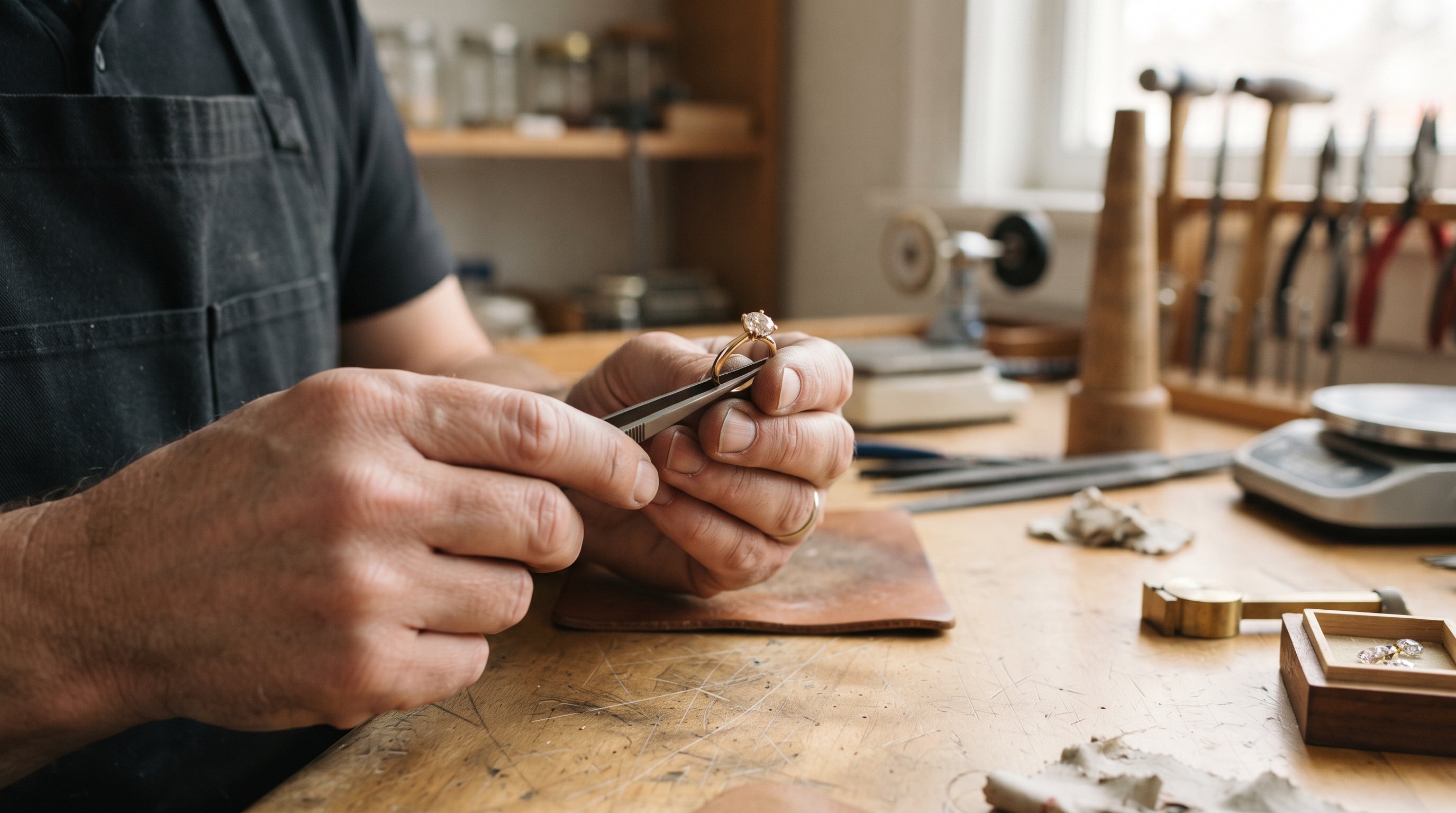
How Are Rings Resized?
One of the most common questions we hear is:
"Can this ring be resized?"
In many cases, the answer is yes—but not always.
Whether it's an engagement ring that no longer fits, a wedding band that's become too tight, or a family heirloom you've recently inherited, resizing can often make a cherished ring comfortable to wear again. At the same time, not every ring should be resized, and the process isn't identical for every style.
The type of metal, the design of the ring, the amount of sizing needed, and even the location of gemstones all play a role in determining whether resizing is appropriate.
How Does Ring Resizing Work?
Although every ring is different, most resizing falls into one of two categories:
Making a ring larger or making a ring smaller.
If a ring needs to be made larger, a jeweler typically cuts the shank (the bottom portion of the ring), carefully adds new matching metal, and solders or laser welds the ring back together before reshaping it into a perfect circle.
If a ring needs to be made smaller, a small section of the shank is usually removed. The ring is then rejoined, reshaped, and finished.
While the basic idea sounds straightforward, achieving an invisible repair that maintains the ring's strength requires precision and experience.
When completed properly, the finished resize should look as though the ring was always that size.
Can Every Ring Be Resized?
Not necessarily.
One of the first questions we ask is:
"Will resizing improve the ring—or could it create new problems?"
Many traditional gold and platinum rings resize beautifully.
However, some rings present additional challenges.
Examples include:
-
Eternity bands with diamonds or gemstones extending all the way around the ring
-
Rings with intricate engraving or decorative patterns that continue around the shank
-
Very thin or heavily worn bands
-
Certain contemporary metals that cannot be soldered using traditional methods
-
Rings with tension settings or unusual structural designs
In some situations, resizing may not be recommended because it could compromise the ring's appearance, structural integrity, or the security of its gemstones.
When that happens, a reputable jeweler should explain why and discuss possible alternatives.
How Much Can a Ring Be Resized?
Many rings can comfortably be resized one or two sizes larger or smaller.
Larger adjustments are sometimes possible, but they depend on the specific ring.
Making significant size changes may affect:
-
The overall proportions of the ring
-
Stone alignment
-
Decorative details
-
Structural strength
-
Long-term durability
Rather than applying a universal rule, an experienced jeweler evaluates each ring individually to determine what can be done safely.
Will the Ring Look Different Afterwards?
Often, yes—but usually in a positive way.
After resizing, the ring is typically polished as part of the finishing process. Polishing removes fine scratches from everyday wear and blends the repaired area so the resize is as seamless and invisible as possible. Without this step, the solder or laser weld and the area where the ring was resized would often remain visible.
Because of that polishing, the ring may actually look brighter and cleaner than it did before the repair.
However, there are exceptions.
Some rings have intentionally brushed, satin, hammered, or other specialty finishes. Those finishes usually need to be recreated after the resize, and while an experienced jeweler can often restore them beautifully, the appearance may not be identical to how it looked after years of everyday wear.
Likewise, antique and estate jewelry sometimes develops a natural patina or oxidation over time that contributes to its character. Because polishing is generally necessary to complete a quality resize, some of that aged appearance may be removed during the process. While certain finishes and oxidation can often be recreated, naturally developed patina is difficult to reproduce immediately and usually returns gradually with time and normal wear.
Why Does the Cost of Ring Resizing Vary?
People are often surprised to learn that there isn't one standard price for resizing a ring.
That's because every repair is different.
Several factors influence the cost, including:
-
The type of metal (gold, platinum, silver, or another material)
-
Whether the ring is being made larger or smaller
-
How many sizes the ring needs to change
-
The width and thickness of the shank
-
Whether additional metal must be added
-
The presence of diamonds or other gemstones
-
Whether specialty finishes need to be restored
-
The overall complexity of the design
For example, resizing a simple yellow gold wedding band is typically much less involved than resizing a wide platinum ring with multiple diamonds and hand engraving.
What Happens to the Gold That's Removed?
When a ring is made smaller, a small section of the shank is removed before the ring is carefully rejoined and reshaped.
Many people assume that because a piece of gold is removed, resizing a ring smaller should cost much less than making it larger. In practice, that's usually not the case.
The cost of a ring resize is primarily based on the skilled labor involved—not simply the amount of metal added or removed.
Whether a ring is sized up or down, the jeweler still needs to carefully cut the ring, reshape it, solder or laser weld it back together, restore its strength, finish the seam so it's invisible, and polish or refinish the entire ring. The time and expertise required are often very similar.
The small piece of precious metal that's removed is typically retained by the jeweler. While it does have value, the amount is usually quite small and generally doesn't offset the labor involved in performing the repair.
Will My Diamonds or Gemstones Be Safe?
Protecting the stones is one of the most important parts of the process.
Changing the size of a ring can slightly alter the stresses placed on the setting. For that reason, an experienced jeweler will often inspect the stones both before and after resizing to make sure they remain secure.
In some cases, worn prongs or loose stones may be discovered during the inspection.
While that can be an unexpected finding, it's often better to identify those issues before they lead to a lost diamond or gemstone.
Should an Antique or Family Ring Be Resized?
Usually, yes—but with extra care.
Many antique and estate rings can be resized successfully, but older jewelry deserves a thoughtful evaluation first.
Years of wear, previous repairs, delicate filigree, or aging metal may influence how the work should be approached.
Sometimes a conservative resize is the safest option. In other cases, preserving the original craftsmanship becomes the highest priority.
The goal isn't simply to make the ring fit—it's to ensure the work respects the history of the piece while allowing it to be worn and enjoyed for years to come.
Sometimes a Ring Needs More Than a Resize
Occasionally, the issue isn't the size of the ring—it's the condition of the shank itself.
Over many years of everyday wear, the bottom of a ring can gradually become thinner as it rubs against other surfaces. In some cases, the metal becomes so worn that simply resizing the ring isn't the safest option.
Instead, the worn portion of the shank may need to be repaired or replaced before the ring can be resized. This restores the ring's strength and provides a more durable foundation for years of future wear.
While a shank replacement is a more involved repair than a standard resize, it is often the better long-term solution for well-loved rings that have become significantly worn over time.
An experienced jeweler will inspect the condition of the ring before recommending any work and explain whether a simple resize is appropriate or whether additional repairs are advisable.
Final Thoughts
Ring resizing is one of the most common jewelry repairs, but it's never a one-size-fits-all procedure.
A successful resize depends on understanding the ring's design, metal, gemstones, condition, and structure before any work begins.
Whether you're resizing an engagement ring, wedding band, estate ring, or family heirloom, an experienced jeweler can determine whether resizing is appropriate, explain the options available, and help ensure the finished ring remains both beautiful and durable.
If you have a ring that no longer fits, we're happy to evaluate it, discuss whether resizing is recommended, and explain what the process would involve before any work begins.
Read more
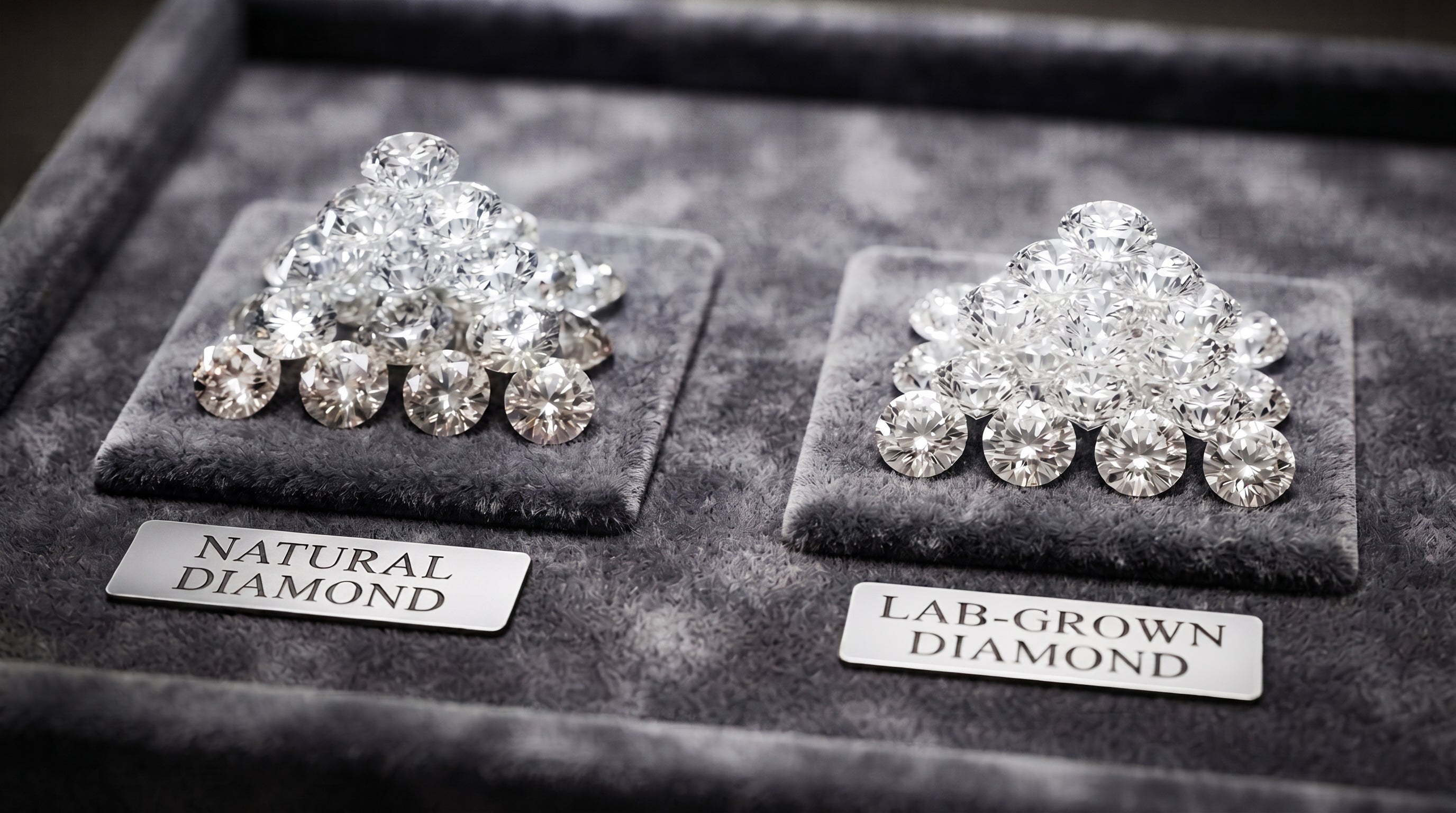
Lab-Grown vs. Natural Diamonds: Understanding the Real Differences Before You Buy
Natural and lab-grown diamonds share many physical characteristics, but they differ in origin, supply, pricing, and how buyers view their long-term value. Learn the real differences before choosing...
Read more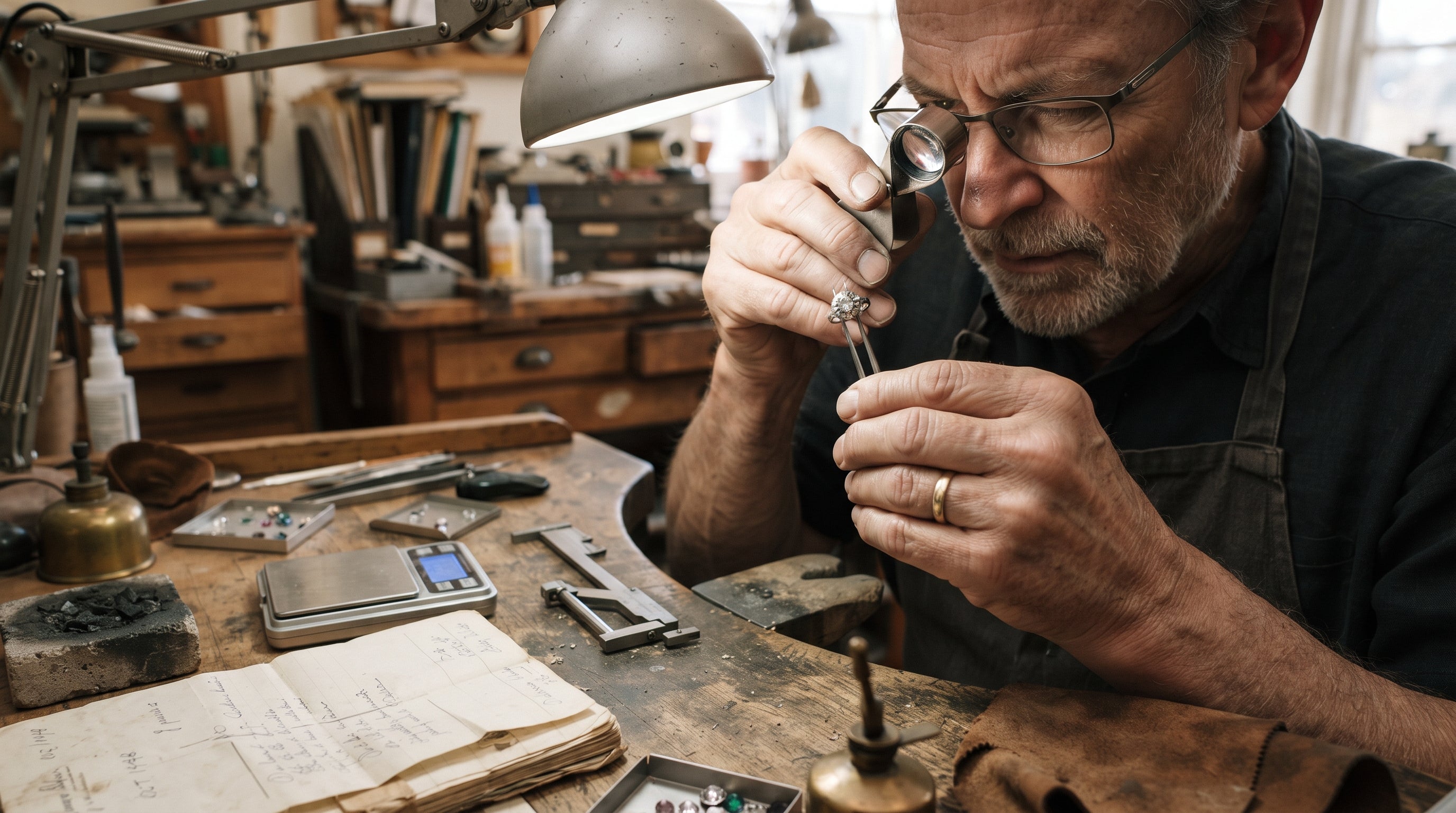
How Do Jewelers Determine What Jewelry Is Worth?
Ever wonder how jewelers determine what jewelry is worth? Learn the questions experienced jewelers ask when evaluating gold, diamonds, gemstones, craftsmanship, condition, designer pieces, and mark...
Read more