
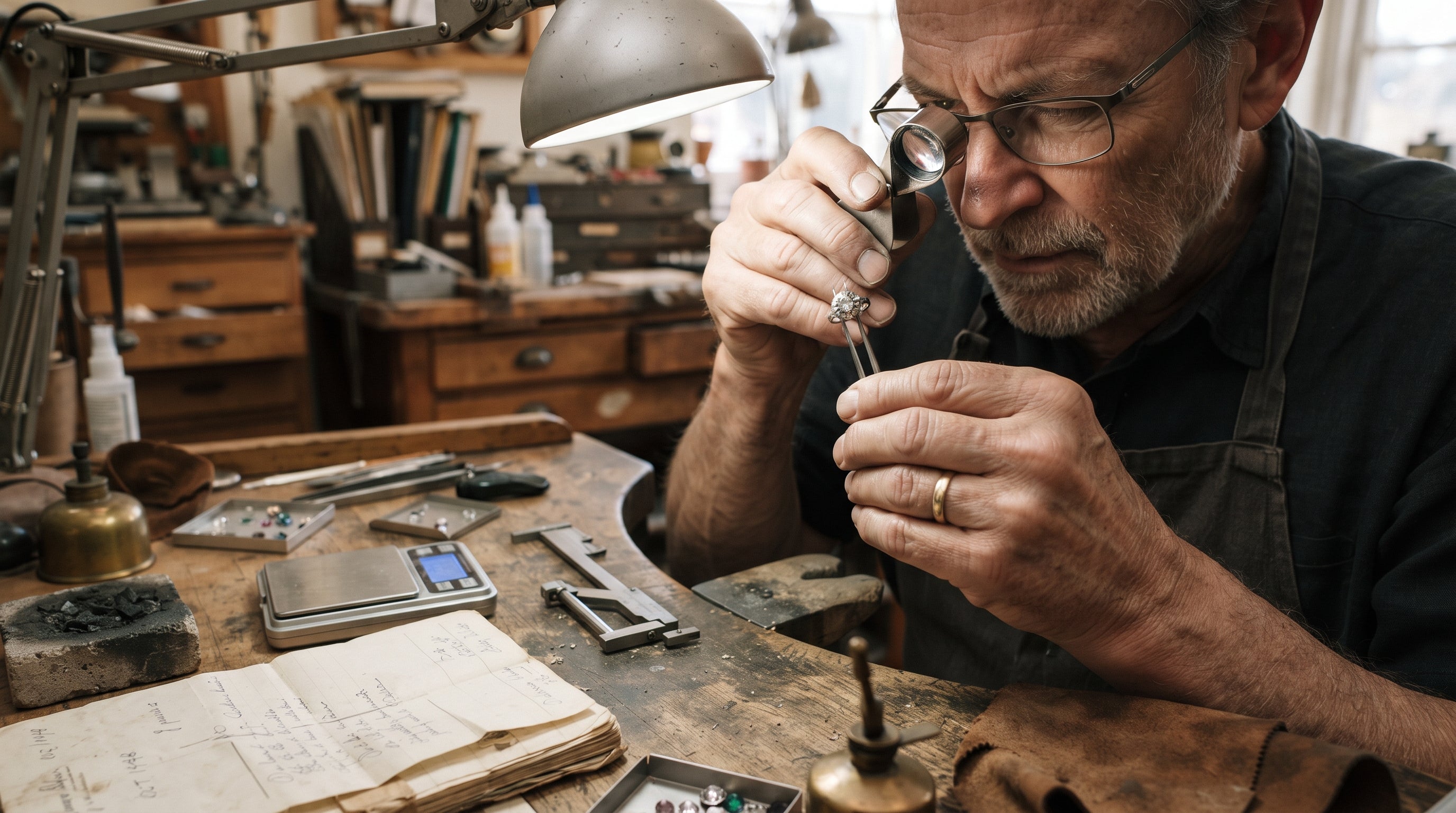
How Do Jewelers Determine What Jewelry Is Worth?
One of the most common questions we hear is, "How much is my jewelry worth?"
It's a simple question, but the answer is rarely simple.
Many people assume there's a chart or formula that determines value. In reality, evaluating jewelry is a process of asking a series of questions. Each answer helps build a more complete picture of what a piece is, how desirable it is, and how it fits into today's market.
That's why two rings that look almost identical at first glance can have dramatically different values once they're examined more closely.
Whether you're considering selling jewelry, consigning a family heirloom, or obtaining an appraisal, understanding how jewelers evaluate jewelry can help explain why values sometimes differ—and why experience matters.
The First Question: What Is It Made Of?
Before anything else, we determine exactly what we're looking at.
Is the piece made of gold, platinum, silver, or another metal? If it's gold, is it 10K, 14K, 18K, or higher? How much does it weigh?
These questions establish the intrinsic material value of the jewelry.
Precious metals have recognized market values that change over time. As gold and platinum prices rise or fall, the underlying material value of many pieces changes as well.
That said, metal value is usually only the starting point. A beautifully crafted ring may be worth far more than its metal content alone, while another piece may be valued primarily for the precious metal it contains.
What Do the Hallmarks Tell Us?
Next, we look for clues left by the original maker.
Many pieces contain hallmarks or stamps indicating the metal purity, country of origin, manufacturer, or designer. Common examples include 14K, 18K, 585, 750, PT950, or sterling silver marks.
Maker's marks can also provide valuable information about where and when a piece was made.
However, hallmarks are only one piece of the puzzle.
Some older jewelry has worn or illegible marks. Other pieces have been resized or repaired, removing portions of the original stamp. Occasionally, jewelry may have no visible marks at all despite being made from precious metals.
Experienced jewelers use hallmarks as helpful evidence—not as the final answer.
What Gemstones Are Present?
Once we've identified the metal, our attention turns to the gemstones.
If a piece contains diamonds, colored gemstones, or pearls, we evaluate much more than their size.
For example, two diamonds that each weigh one carat can differ significantly in value depending on factors such as color, clarity, cut, overall appearance, and whether they are natural or lab-grown.
Colored gemstones present their own considerations. Species, variety, color, transparency, treatments, and overall quality all influence how a gemstone is viewed in the marketplace.
In many cases, the gemstones contribute more to a piece's value than the metal itself.
How Well Was It Made?
Craftsmanship is one of the factors that's hardest to explain—but one of the easiest for an experienced jeweler to recognize.
Some jewelry was produced quickly in large quantities. Other pieces required hours of hand fabrication, engraving, stone setting, or finishing by skilled craftspeople.
When we examine jewelry, we're looking at details such as:
- The quality of the stone setting
- Precision of the finishing
- Hand engraving or decorative work
- Overall construction and durability
Exceptional craftsmanship doesn't automatically make a piece more valuable, but it often contributes to its desirability and can influence both appraisal and resale potential.
Is It Signed by a Well-Known Maker?
Designer jewelry often attracts additional interest—but not always for the reasons people expect.
Recognized makers such as Cartier, Tiffany & Co., Van Cleef & Arpels, David Webb, or Buccellati have established reputations for design and craftsmanship. As a result, many buyers actively seek their work.
However, a designer signature does not automatically translate into a higher resale value.
Some collections were produced in large quantities and are readily available on the secondary market. Others were made in limited numbers, represent iconic periods in a designer's history, or have become highly collectible over time.
As with most jewelry, the brand is one factor among many—not a guarantee of value.
How Old Is the Piece?
Age is another area where misconceptions are common.
Older jewelry can certainly be desirable, but age alone doesn't determine value.
An antique ring from the 1920s may be highly sought after because of its craftsmanship, rarity, or design. Another piece from the same decade may have little collector interest.
Likewise, a contemporary piece featuring exceptional gemstones or outstanding design may be worth considerably more than an average antique piece.
Rather than asking, "How old is it?" we also ask, "Does its age make it more desirable?"
Is Anyone Looking for It Today?
Perhaps the most important question is also the hardest to answer.
What does today's market want?
Jewelry values don't exist in a vacuum. They are influenced by changing tastes, fashion trends, collector interest, and consumer demand.
Styles come and go.
Yellow gold becomes popular again. White metals gain favor. Certain gemstone cuts return to fashion after decades of being overlooked.
Even within the diamond market, buyer preferences continue to evolve. Some consumers specifically seek natural diamonds, while others are comfortable choosing lab-grown stones. These changing preferences influence how different types of jewelry are valued in today's marketplace.
A beautiful piece still needs someone who wants to own it.
What Condition Is It In?
Condition affects nearly every category of jewelry.
During an evaluation, we look for:
- Wear to the metal
- Previous repairs
- Missing or chipped stones
- Loose settings
- Signs of alteration
- Overall structural integrity
Many estate pieces show normal wear from years of careful use, which is entirely expected.
The question isn't whether a piece has been worn—it's whether its condition supports long-term wearability and market appeal.
Well-maintained jewelry generally attracts stronger interest than pieces requiring significant restoration.
Is There Any Provenance?
Occasionally, a piece comes with documentation that adds another layer to its story.
Original receipts, boxes, historical records, family documentation, or confirmed ownership by a notable individual may all contribute to provenance.
It's important to understand, however, that most estate jewelry does not have documented provenance.
In many cases, we can identify approximately when a piece was made and recognize the craftsmanship of a particular period without knowing who originally owned it.
When provenance exists, it can enhance historical interest and, in some cases, value. When it doesn't, the jewelry is still evaluated on its own merits.
Putting the Pieces Together
If this sounds like a lot of moving parts, that's because it is.
Determining jewelry value isn't based on any single characteristic. It's the result of considering all of these factors together.
A useful comparison is buying a home.
Square footage matters—but so do location, condition, architectural style, neighborhood, updates, and market demand. Two houses with the same square footage can sell for dramatically different prices because of everything else surrounding them.
Jewelry works much the same way.
Two rings may weigh the same, contain similar diamonds, and be made of the same metal, yet differ significantly in value because of craftsmanship, condition, rarity, or buyer demand.
Why Two Jewelers May Not Offer the Same Price
One final point often surprises people.
Not every jeweler evaluates jewelry for the same purpose.
An insurance appraiser, an estate appraiser, a retailer considering a piece for inventory, a refiner purchasing for metal value, and an auction house may all arrive at different values because they are answering different questions.
That's why it's important to understand not only what your jewelry is worth, but why it's being valued and for what purpose.
If you've ever wondered why an insurance appraisal may be very different from what someone is willing to pay for your jewelry, read our guide explaining the different types of jewelry values.
Final Thought
After evaluating jewelry for many years, one thing becomes clear: every piece tells its own story.
Some are valuable because of the precious metals they contain. Others because of exceptional gemstones, remarkable craftsmanship, historical significance, or simply because today's buyers are searching for exactly that style.
Determining what jewelry is worth isn't about applying a single formula. It's about understanding how all of those pieces fit together.
Whether you're considering an appraisal, selling a piece, consigning a collection, or simply curious about something you've inherited, an experienced evaluation can provide the context that numbers alone never can.
Read more
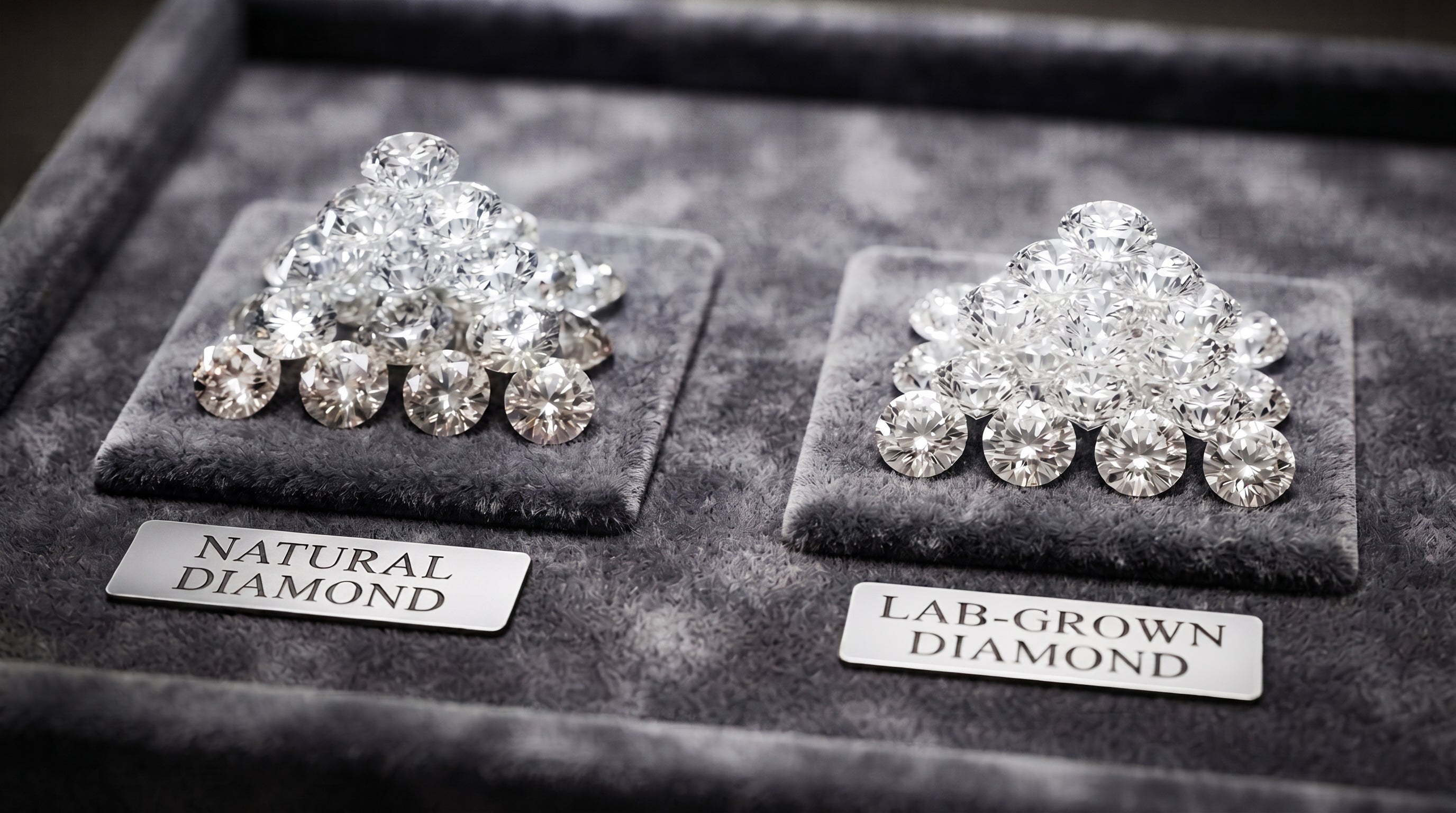
Lab-Grown vs. Natural Diamonds: Understanding the Real Differences Before You Buy
Natural and lab-grown diamonds share many physical characteristics, but they differ in origin, supply, pricing, and how buyers view their long-term value. Learn the real differences before choosing...
Read more
What Makes a Diamond Valuable?
What makes a diamond valuable? It's more than size or sparkle. Learn how rarity, natural origin, craftsmanship, beauty, and market demand combine to influence a diamond's lasting appeal and why eve...
Read more