
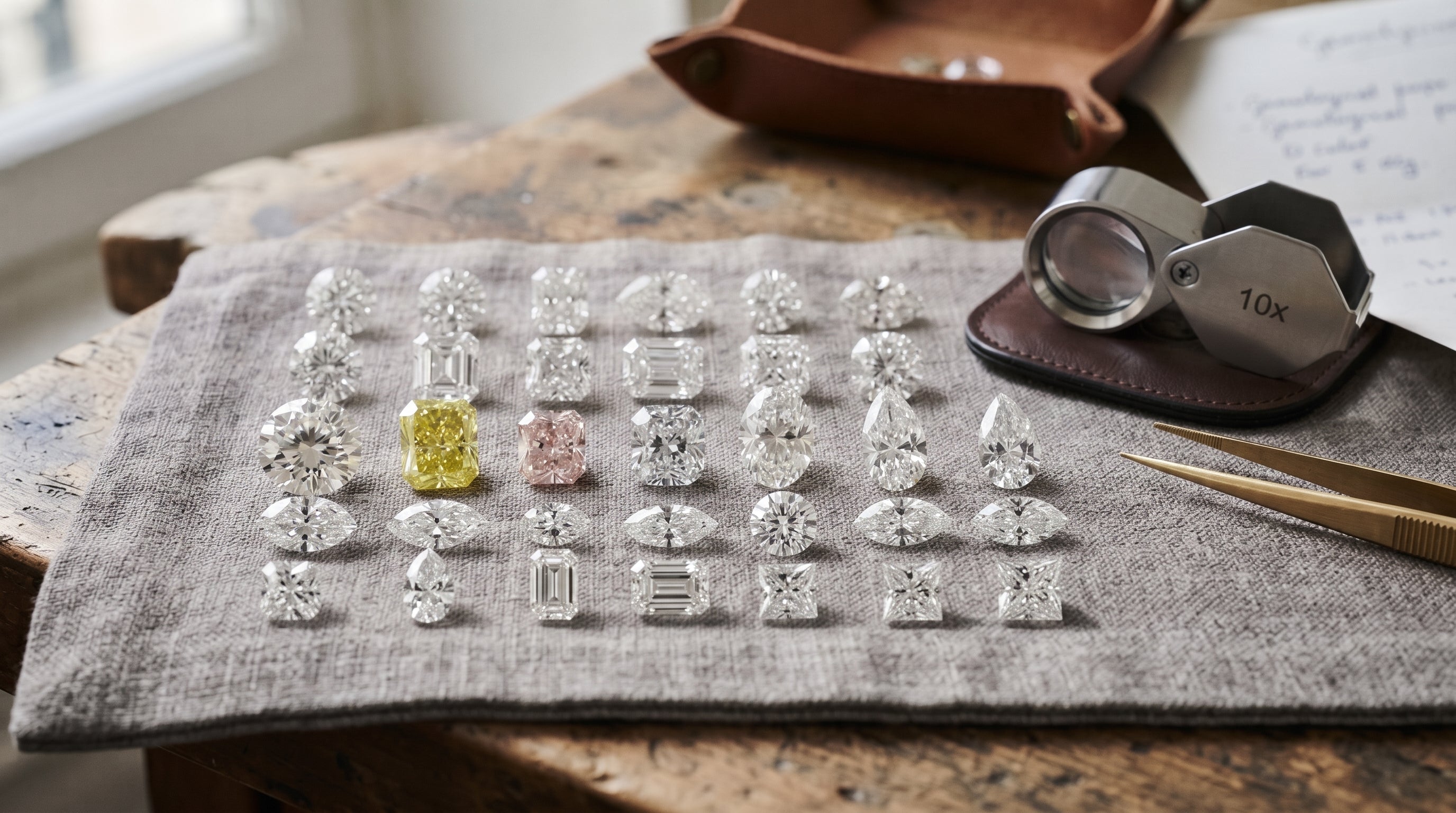
How Do Jewelers Determine What a Diamond Is Worth?
If you've ever compared two diamonds that looked almost identical but carried very different price tags, you've probably wondered:
"What makes one diamond worth more than another?"
Many people assume the answer is as simple as size. Others have heard of the "4 Cs" and assume those four characteristics tell the whole story.
The reality is more nuanced.
When an experienced jeweler evaluates a diamond, we aren't checking boxes on a grading chart. We're looking at how a combination of characteristics work together to create beauty, rarity, and desirability. Every diamond has strengths and compromises, and understanding those relationships is what determines value.
Whether you're buying a diamond, insuring a family heirloom, considering selling, or simply curious about a family stone, here's how jewelers approach the evaluation process.
The First Question: Is It Natural or Lab-Grown?
Today's evaluation begins with one of the biggest distinctions in the diamond market.
Is the diamond natural or lab-grown?
Both are genuine diamonds with the same chemical composition and many of the same physical properties. The difference is how they were formed—and how today's marketplace views them.
Natural diamonds formed over billions of years beneath the earth's surface and remain the choice for many buyers who value their rarity and natural origin.
Lab-grown diamonds are created using advanced technology in controlled environments. They have made larger and higher-quality diamonds accessible to many consumers, but they generally occupy a different resale market than natural diamonds.
This distinction doesn't determine whether a diamond is beautiful, but it does influence how its value is assessed.
How Large Is the Diamond?
Carat weight is usually the first specification people notice.
Larger diamonds are less common than smaller ones, so all else being equal, larger diamonds generally command higher prices.
It's also important to understand that diamond prices don't increase in a straight line as size increases. The price per carat generally rises as diamonds become larger because larger gem-quality diamonds are increasingly rare. For example, two half-carat diamonds typically are not worth the same as one one-carat diamond of comparable quality. In many cases, the single one-carat diamond will be worth considerably more.
Of course, all else is rarely equal.
A one-carat diamond with exceptional beauty may be worth considerably more than a larger diamond with poor color, noticeable inclusions, or a cut that doesn't return light well.
Likewise, two one-carat diamonds can have dramatically different values depending on their overall quality.
Size is an important part of the conversation—but it's only one part.
Does It Come Alive in the Light?
If there is one characteristic experienced jewelers tend to notice immediately, it's how a diamond performs in light.
Before looking at paperwork, we often look at the diamond itself.
Does it appear bright?
Does it sparkle from across the room?
Does it return light evenly, or does it look dark in the center?
These qualities are largely influenced by cut.
A well-cut diamond reflects light back to the viewer, creating the brilliance, fire, and scintillation that make diamonds so captivating.
An average diamond with exceptional cut can often appear more beautiful than a technically higher-graded diamond with poor proportions.
This is one reason two diamonds with the same carat weight can differ significantly in value.
How White Does It Appear?
Most white diamonds contain subtle traces of color.
Professional grading laboratories evaluate this on a standardized scale, with the most colorless diamonds generally being the rarest.
But color is rarely judged in isolation.
A slightly warmer diamond may look stunning in an antique yellow gold ring, while a bright white diamond may be the perfect complement to a platinum solitaire.
Experienced jewelers consider how color interacts with the diamond's cut, the setting, and the overall appearance of the piece.
Sometimes the diamond that looks best isn't the one with the highest color grade.
What Is Happening Inside the Diamond?
Clarity describes the tiny natural characteristics that formed as the diamond grew.
These internal and external features are part of every natural diamond's story.
Generally speaking, diamonds with fewer noticeable characteristics are rarer.
However, clarity grades don't always tell you how a diamond will look.
Some inclusions are invisible without magnification and have virtually no impact on beauty. Others are more noticeable or affect durability.
Rather than focusing only on the grade, experienced jewelers ask a more practical question:
Can you actually see it, and does it matter?
Is the Shape Popular?
Shape isn't the same as cut, but it does influence value.
Round brilliant diamonds have traditionally been the most sought-after shape and often command premium prices because they retain less weight during cutting and require greater precision to produce.
Other shapes—including oval, cushion, emerald, radiant, pear, and marquise—experience changing levels of popularity over time.
Market preferences shift.
A shape that is highly sought after today may become less fashionable in the future, while another quietly returns to popularity.
Because of that, buyer demand becomes part of the overall valuation.
Does It Have a Grading Report?
Many diamonds are accompanied by grading reports from respected laboratories such as GIA.
These reports provide an independent assessment of characteristics including carat weight, color, clarity, proportions, and measurements.
They are valuable because they create a common language for buyers and sellers.
However, a grading report doesn't tell the entire story.
It doesn't describe how a diamond makes you feel when you see it.
It doesn't always capture subtle differences in beauty.
And many exceptional family diamonds were purchased long before laboratory reports became common.
Documentation adds confidence—but it doesn't replace experience.
Is It Damaged or Has It Been Altered?
Condition matters.
A chipped girdle, worn facet junctions, significant abrasions, or previous repairs can all influence value.
Fortunately, many diamonds remain remarkably durable after decades of wear.
During an evaluation, we also examine the setting.
A loose diamond may simply need routine maintenance, while worn prongs or previous repairs may affect both safety and overall presentation.
What Does Today's Market Want?
One of the most overlooked parts of diamond valuation has nothing to do with the diamond itself.
It has to do with the marketplace.
Consumer preferences evolve.
Interest in natural diamonds, vintage cuts, elongated shapes, and certain sizes changes over time. The same is true with diamond color. While many traditional diamond buyers seek colorless or near-colorless stones, some of the rarest and most sought-after diamonds in the world are "fancy color" diamonds—such as vivid yellow, pink, blue, or green diamonds. Their value comes not from a lack of color, but from the rarity, intensity, and desirability of that color.
Some buyers specifically seek antique Old European Cut diamonds because of their distinctive character and hand-cut appearance.
Others are looking for modern precision-cut stones with maximum brilliance.
A diamond's value reflects not only what it is, but also how today's buyers respond to it.
Putting It All Together
This is why experienced jewelers rarely focus on a single specification.
A diamond may be slightly smaller but beautifully cut.
Another may have a modest clarity grade but appear perfectly clean to the naked eye.
One may carry a prestigious grading report, while another has spent generations in a family without ever needing one.
No single characteristic determines value.
Instead, each contributes to the complete picture.
The most valuable diamonds aren't necessarily the largest, the whitest, or the highest graded.
They're the ones whose combination of beauty, rarity, craftsmanship, condition, and market appeal make them genuinely exceptional.
Final Thought
The 4 Cs are an excellent starting point, but they aren't the entire conversation.
Determining what a diamond is worth requires looking beyond individual grades to understand how every characteristic works together.
That's why two diamonds with similar specifications can have very different values—and why an experienced evaluation goes far beyond reading a laboratory report.
Whether you're buying a diamond, obtaining an appraisal, considering selling, or evaluating a family heirloom, understanding how jewelers assess diamonds provides valuable context that numbers alone can't always explain.
Read more
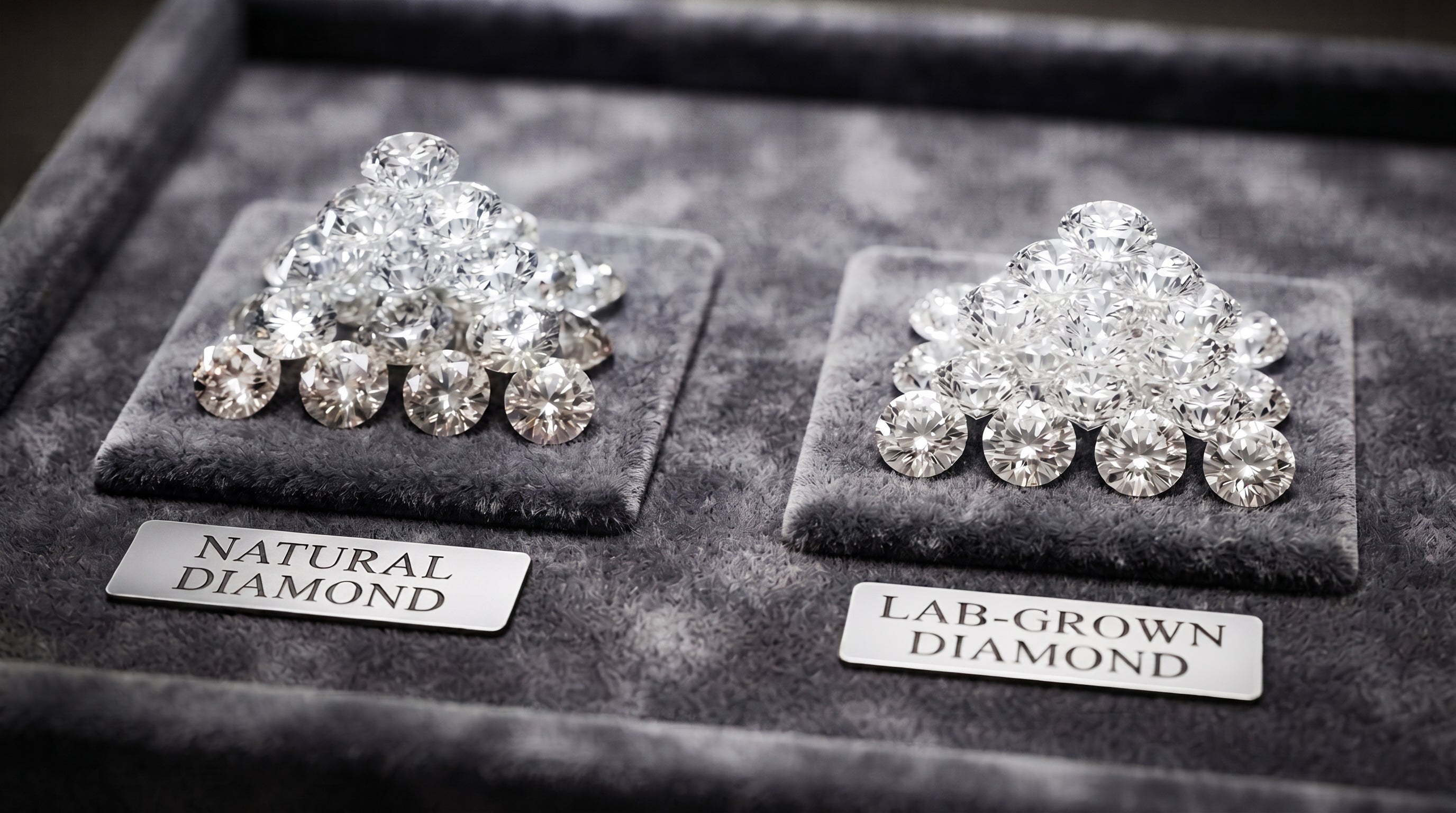
Lab-Grown vs. Natural Diamonds: Understanding the Real Differences Before You Buy
Natural and lab-grown diamonds share many physical characteristics, but they differ in origin, supply, pricing, and how buyers view their long-term value. Learn the real differences before choosing...
Read more
How Do Jewelers Determine What Jewelry Is Worth?
Ever wonder how jewelers determine what jewelry is worth? Learn the questions experienced jewelers ask when evaluating gold, diamonds, gemstones, craftsmanship, condition, designer pieces, and mark...
Read more