
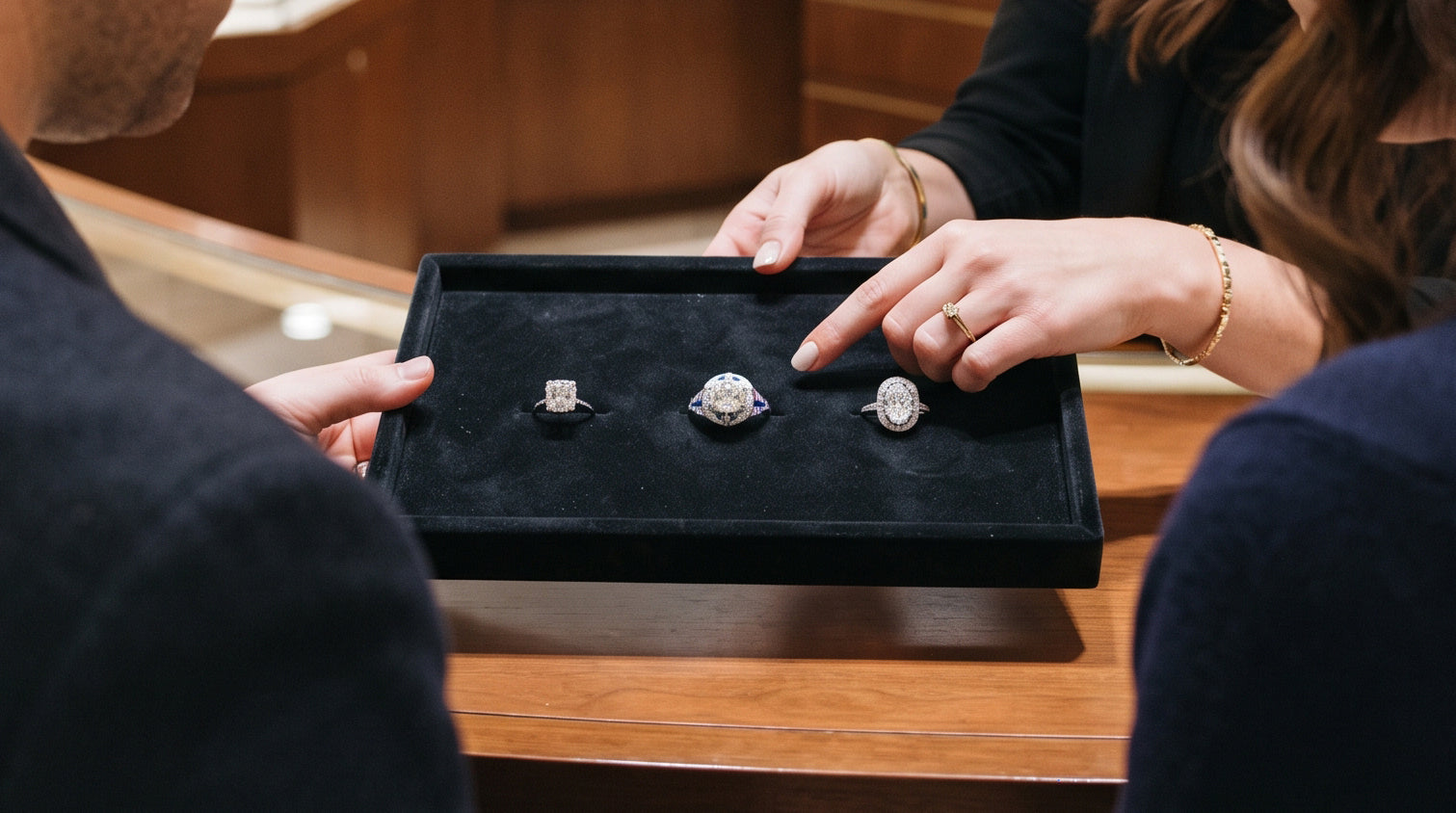
How to Buy an Engagement Ring with Confidence
Buying an engagement ring is one of the most meaningful purchases many people will ever make. It's also one of the few purchases where two rings that look remarkably similar can differ significantly in price.
That can make the process feel overwhelming.
One of the most common questions we hear is:
"How do I know I'm getting good value?"
The good news is that you don't need to become a diamond expert overnight. You simply need to understand what influences value, know which questions are worth asking, and work with someone who is willing to explain the differences.
Start With Your Priorities—Not Someone Else's Rules
You've probably heard the old advice that an engagement ring should cost two or three months' salary.
Today, most couples recognize there is no universal formula.
Some would rather spend more on a honeymoon. Others are saving for a home, planning a wedding, or simply prefer a ring that reflects their style without stretching their budget.
An engagement ring should fit your life—not someone else's expectations.
Starting with a comfortable budget gives you a framework for exploring your options while allowing you to prioritize the features that matter most to you.
Decide What Matters Most
Every engagement ring is a balance of choices.
Would you rather have a larger diamond or a higher-quality one? A classic solitaire or an intricate vintage-inspired design? A newly made ring or one with history and character?
There isn't a single "right" answer.
Some people fall in love with exceptional sparkle. Others are drawn to craftsmanship, uniqueness, or a particular style. For some couples, staying within a specific budget is the highest priority.
The best engagement ring isn't the one someone else would choose—it's the one that best reflects your priorities.
Similar-Looking Rings Are Rarely Identical
One of the biggest misconceptions in engagement ring shopping is that two rings that appear similar should cost about the same.
In reality, small differences can have a significant impact on value.
The quality of the diamond, the craftsmanship of the setting, the amount of precious metal used, the way the stones are set, and the overall construction of the ring all contribute to the final price.
In some cases, you're also comparing a mass-produced mounting with one that has been custom designed or individually manufactured. While both may hold the same size diamond, the time, craftsmanship, and labor involved can be very different.
Photographs and specification sheets don't always tell the whole story. Looking beyond the numbers and understanding what you're actually comparing is one of the best ways to shop confidently.
If a Price Seems Too Good to Be True, Take a Closer Look
Everyone appreciates finding a good value.
But when an engagement ring is priced dramatically lower than comparable options, it's worth taking a closer look before assuming you've found the best deal.
Sometimes there's a perfectly reasonable explanation.
Other times, the differences aren't immediately obvious.
The diamond may have characteristics that aren't apparent in photographs. The setting may be manufactured differently. The ring may contain less precious metal, require less labor to produce, or simply be built to a different standard.
The opposite can also be true. A higher price doesn't automatically mean a ring is better.
The goal isn't to choose the least expensive or the most expensive ring—it's to understand what you're comparing and decide which option offers the best value for you.
A Diamond's Beauty Can't Always Be Measured on Paper
Diamond grading reports are incredibly valuable tools, but they don't tell the entire story.
Over the years, we've seen countless diamonds with nearly identical grades look surprisingly different once they're placed side by side.
Some simply have more life, brightness, and sparkle than others.
The way a diamond returns light, the precision of its cut, and its overall visual appeal don't always translate perfectly to a list of specifications.
That's one reason many people still appreciate seeing diamonds in person before making such an important decision. Comparing them with your own eyes often provides a perspective that no grading report can fully capture.
The Setting Matters More Than Many People Realize
The center diamond naturally receives most of the attention, but the setting deserves just as much consideration.
An engagement ring is designed to be worn every day, often for decades.
A well-made setting protects the diamond, provides long-term durability, and is built to withstand everyday life.
Details such as sturdy prongs, thoughtful engineering, balanced proportions, and careful finishing may not be immediately noticeable, but they often make a significant difference over the lifetime of the ring.
Consider the Relationship, Not Just the Purchase
An engagement ring isn't simply a one-time purchase.
Over the years, it may need to be professionally cleaned, inspected, resized, repaired, refinished, or even redesigned as life changes.
That's one reason many people value buying from an established jeweler they know and trust—someone who will be there long after the purchase is complete.
Whether you choose to shop locally or online, it's worth thinking about the years that follow the sale.
Who will inspect the ring to make sure the stones remain secure?
Where will you go if it needs resizing?
If a prong wears down years from now, who will repair it?
Those services may not appear on a price tag, but they are part of the overall value of the purchase.
Don't Overlook Estate Engagement Rings
Many buyers begin their search assuming they'll purchase a brand-new ring, but estate engagement rings are well worth considering.
Estate jewelry simply means previously owned jewelry, and many estate rings offer exceptional craftsmanship, distinctive design, and excellent value.
Rather than paying for newly manufactured jewelry, you're often purchasing a ring that has already stood the test of time.
Many estate engagement rings feature hand-finishing, antique diamond cuts, and design details that would be difficult—or expensive—to reproduce today.
For buyers looking for something unique, estate jewelry can be an outstanding alternative to buying new.
Confidence Comes From Understanding
One thing we've learned after evaluating and selling engagement rings for generations is that confidence rarely comes from finding the lowest price.
It comes from understanding what you're buying.
When you understand why one ring costs more than another, what factors influence quality, and how those differences relate to your own priorities, you're far more likely to feel good about your decision.
Buying with confidence isn't about becoming an expert overnight.
It's about working with someone who is willing to answer your questions honestly, explain the differences clearly, and help you choose the ring that's right for you.
Final Thoughts
Buying an engagement ring isn't about finding the lowest price. It's about understanding what you're buying, choosing quality that matches your priorities, and working with someone you trust.
Years from now, most people won't remember the exact specifications of the diamond or what the ring cost. They'll remember the proposal, the excitement of saying "yes," and the life built around it.
A well-chosen engagement ring should feel like a purchase you would happily make again—not because it was the cheapest, but because you understood its value from the very beginning.
Find the Ring That's Right for You
Every engagement ring purchase begins with a conversation. Whether you're looking for a classic solitaire, hoping to find a distinctive estate ring, or interested in creating something custom, we'll help you explore your options and source the right ring for your style and budget. Learn more about our Engagement Rings, Estate Rings, and Custom Design Services, or schedule a consultation to get started.
Read more
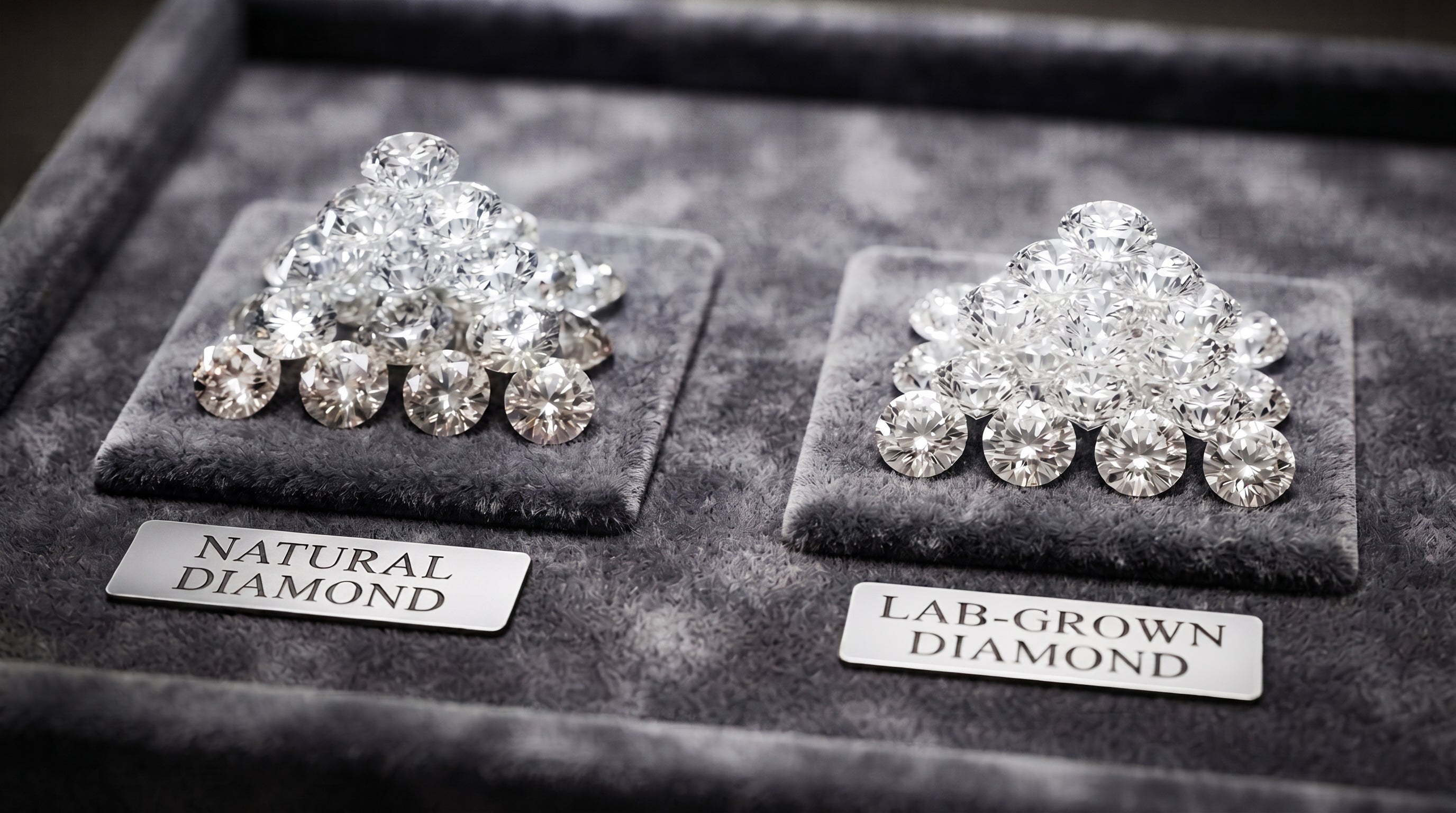
Lab-Grown vs. Natural Diamonds: Understanding the Real Differences Before You Buy
Natural and lab-grown diamonds share many physical characteristics, but they differ in origin, supply, pricing, and how buyers view their long-term value. Learn the real differences before choosing...
Read more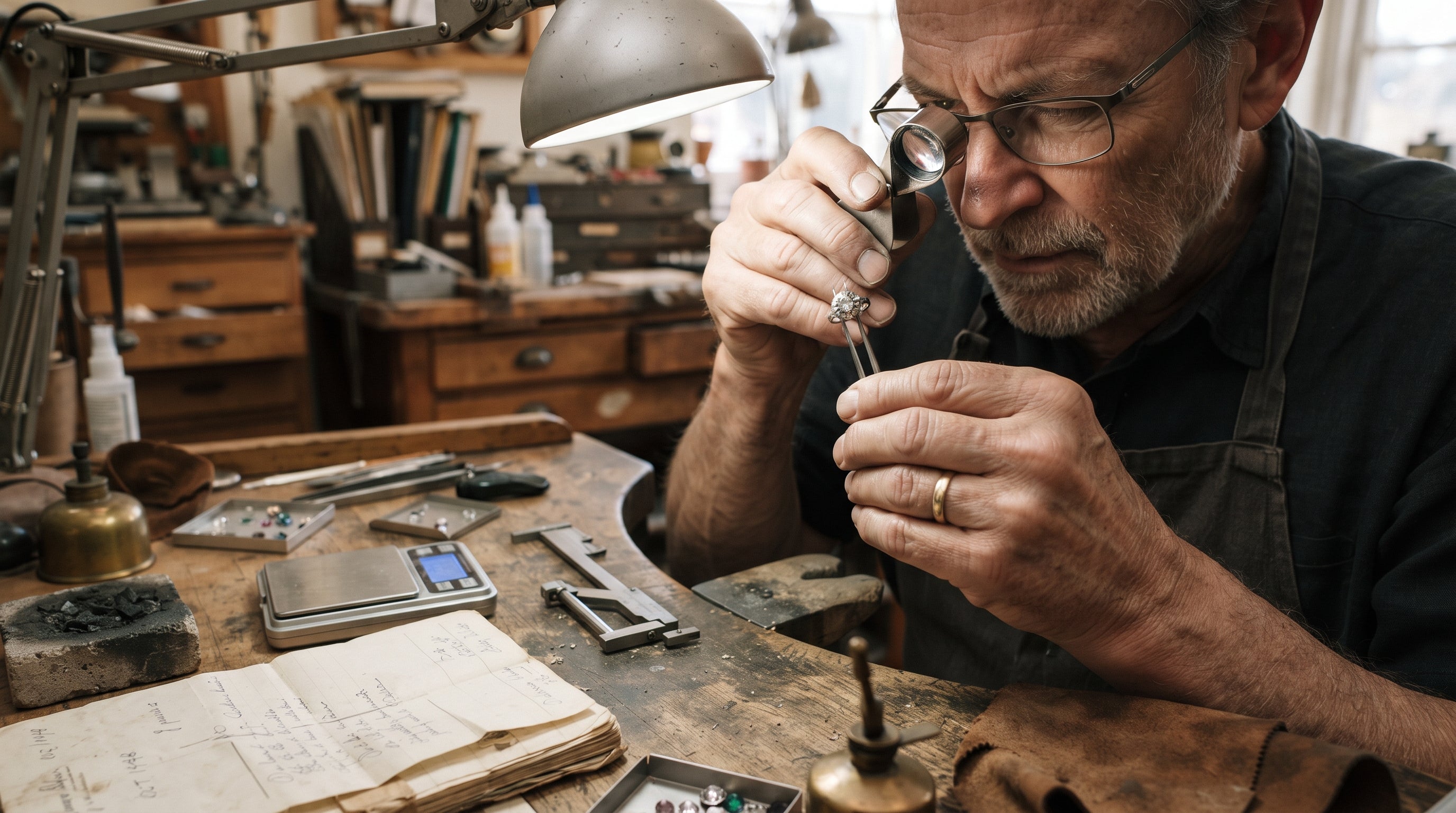
How Do Jewelers Determine What Jewelry Is Worth?
Ever wonder how jewelers determine what jewelry is worth? Learn the questions experienced jewelers ask when evaluating gold, diamonds, gemstones, craftsmanship, condition, designer pieces, and mark...
Read more