
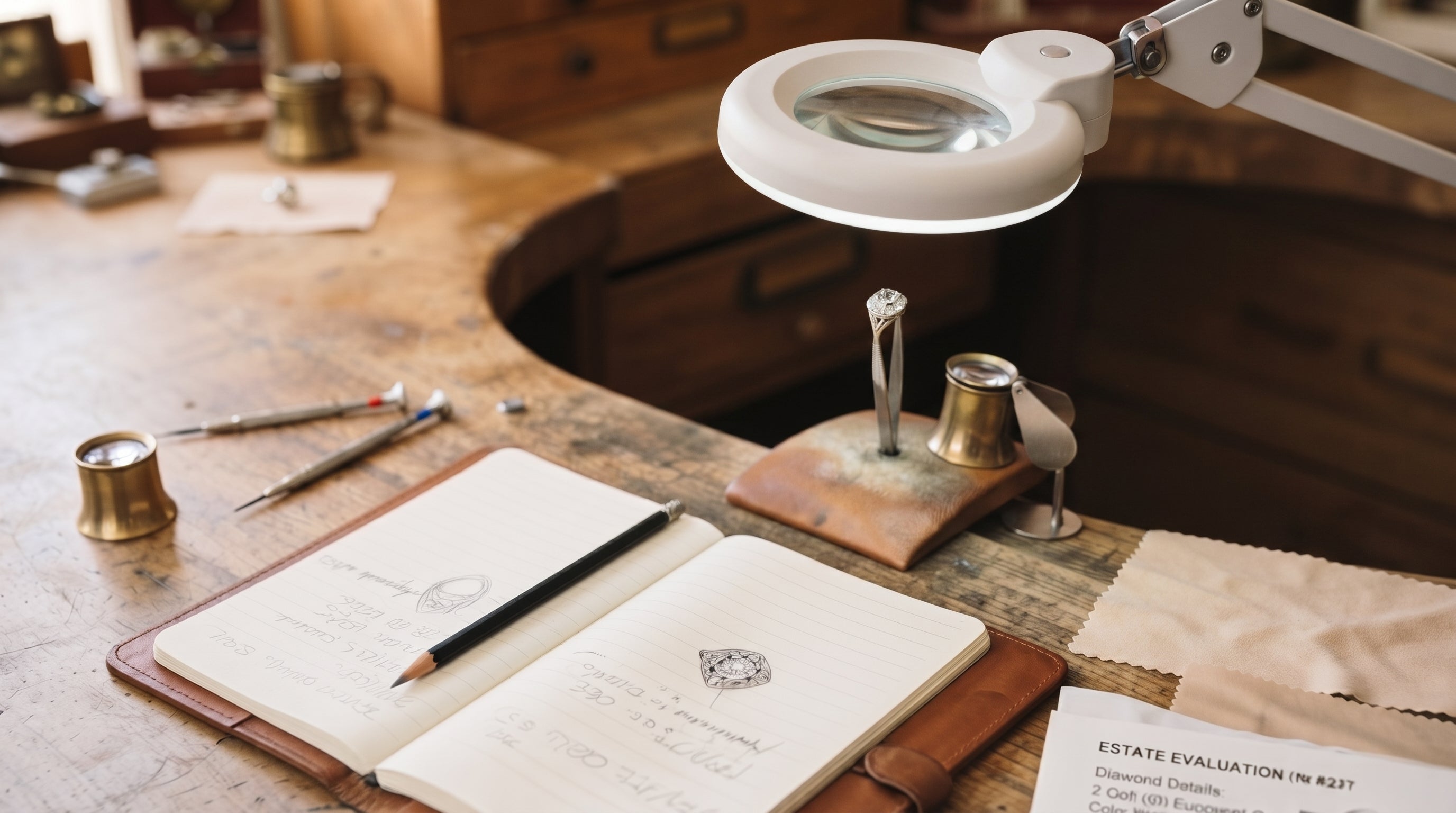
Why Do Two Jewelry Appraisers Give Different Values for the Same Piece?
One of the most common questions jewelry owners ask after receiving an appraisal is:
"Why did another appraiser give me a different value for the same piece?"
It is an understandable question. After all, if a diamond ring, necklace, or family heirloom is the same piece of jewelry, it can seem logical that there should be one correct answer.
The reality is that jewelry valuation is not as simple as looking up a fixed price.
Unlike publicly traded commodities with constantly changing market prices, most jewelry does not have one universal value. A professional appraisal is an informed opinion of value based on the purpose of the appraisal, the characteristics of the jewelry, current market conditions, and the expertise of the person performing the evaluation.
Different appraisers can sometimes arrive at different conclusions while still performing their work professionally and accurately.
Understanding why this happens can help you better interpret an appraisal and understand what the number actually represents.
The First Question: What Type of Value Is Being Determined?
The biggest reason two appraisals may differ is that they may be answering different questions.
The word "value" can mean several different things in the jewelry industry.
For example, an insurance appraisal is typically designed to answer:
"What would it cost to replace this item with a comparable piece today?"
This type of valuation considers the current retail environment, including the cost of sourcing materials, craftsmanship, manufacturing, and retail expenses.
A fair market value appraisal answers a different question:
"What is this property reasonably worth in an appropriate marketplace between a willing buyer and willing seller?"
A liquidation value may consider:
"What could this piece reasonably bring if it needed to be sold quickly?"
These are all legitimate values, but they are not interchangeable.
A difference in valuation does not necessarily mean one appraiser is incorrect—it may mean they were evaluating the jewelry for a different purpose.
Jewelry Value Requires Professional Judgment
Many people assume jewelry valuation is a simple calculation:
- weigh the gold
- measure the diamond
- look up a price
- determine the value
While these factors are important, experienced appraisers know that jewelry rarely fits into a simple formula.
Two diamond rings may have the same carat weight, but differ in:
- cut quality
- color
- clarity
- craftsmanship
- condition
- brand recognition
- market demand
An antique piece may have value because of its age, rarity, and workmanship. Another piece from the same era may have little collector interest.
A signed designer piece may command additional attention—but only if there is current demand for that particular maker or style.
The appraiser must interpret how all of these characteristics work together.
Different Appraisers May Weigh Factors Differently
Even when two professionals are evaluating the same information, they may place slightly different emphasis on certain factors.
For example:
One appraiser may place greater weight on comparable retail examples.
Another may focus more heavily on recent market sales.
Another may consider rarity or historical significance more strongly.
This is particularly true with estate jewelry, antique jewelry, unusual gemstones, and one-of-a-kind pieces where there may not be many exact comparisons available.
A professional appraisal is not simply a number pulled from a chart—it is the result of experience, research, and interpretation.
The Jewelry Market Changes Over Time
Jewelry values are also affected by timing.
Market conditions change.
Gold, silver and platinum prices fluctuate.
Diamond and gemstone demand changes.
Fashion trends evolve.
Consumer preferences shift.
A jewelry appraisal completed many years ago may no longer reflect today's marketplace, even if the physical piece has not changed.
This is especially common with inherited jewelry. A family may discover an old appraisal showing one value, only to find that current market conditions support a different valuation.
That does not mean the original appraisal was necessarily wrong—it reflected the information and market conditions available at that time.
Condition and Details Matter More Than Many People Realize
Small differences can have a meaningful impact on value.
During an evaluation, an appraiser considers details such as:
- whether gemstones are secure
- whether repairs have been performed
- whether the original design has been altered
- whether stones are damaged or worn
- whether documentation exists
Two pieces that appear nearly identical at first glance may have very different values once examined closely.
This is one reason professional evaluation requires more than simply identifying a gemstone or weighing precious metal.
So Which Appraisal Is Correct?
The better question is:
"Which appraisal is appropriate for my purpose?"
If you are insuring a valuable family heirloom, you need a valuation that helps you replace it.
If you are settling an estate, dividing assets, or making a financial decision, you may need a different type of valuation.
If you are considering selling, an appraisal may provide useful information—but it is not the same thing as a purchase offer.
An appraisal explains value. A buyer's offer reflects what that buyer is willing to pay based on their intended use, current market conditions, and the risks involved in purchasing the piece.
Why Experience Matters
A knowledgeable jewelry professional does more than assign a number.
They help explain:
- what your jewelry is
- why it has value
- what factors influence that value
- what type of valuation is appropriate for your situation
The goal is not simply to produce a number—it is to provide context.
Final Thought
It can be surprising to learn that two qualified jewelry professionals may arrive at different valuations for the same piece. However, this is often a reflection of the complexity of jewelry itself.
Jewelry value is influenced by purpose, market conditions, materials, craftsmanship, rarity, condition, and demand.
The most important question is not always:
"Why are these numbers different?"
It is:
"What question was each valuation trying to answer?"
Understanding that distinction allows you to make more informed decisions about your jewelry—whether you are insuring a treasured heirloom, settling an estate, or simply trying to understand what you own.
If you are unsure which type of appraisal is appropriate for your situation, learn more about our jewelry appraisal services and how different appraisal types are used for insurance, estate planning, and other purposes.
Read more
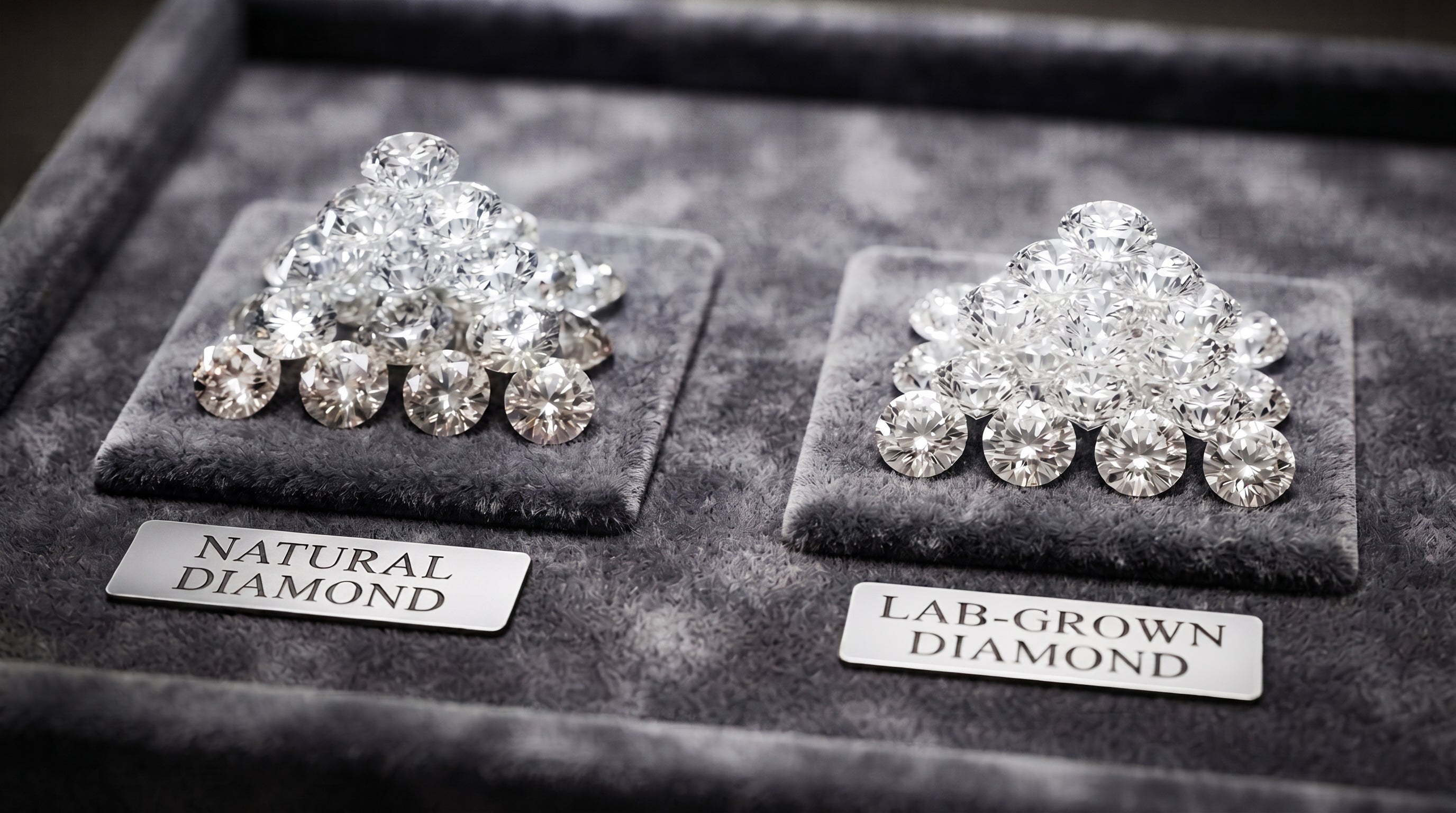
Lab-Grown vs. Natural Diamonds: Understanding the Real Differences Before You Buy
Natural and lab-grown diamonds share many physical characteristics, but they differ in origin, supply, pricing, and how buyers view their long-term value. Learn the real differences before choosing...
Read more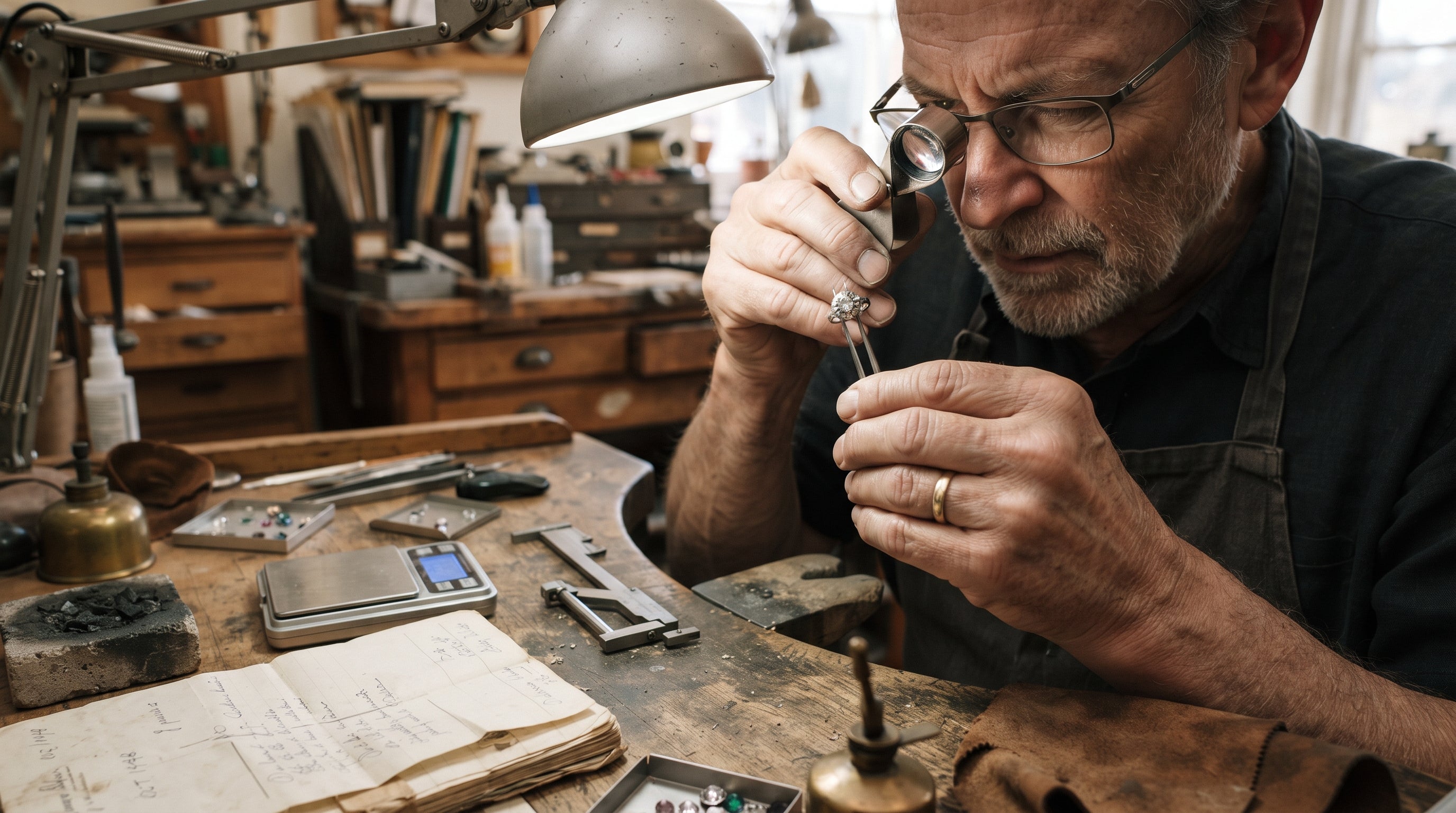
How Do Jewelers Determine What Jewelry Is Worth?
Ever wonder how jewelers determine what jewelry is worth? Learn the questions experienced jewelers ask when evaluating gold, diamonds, gemstones, craftsmanship, condition, designer pieces, and mark...
Read more